
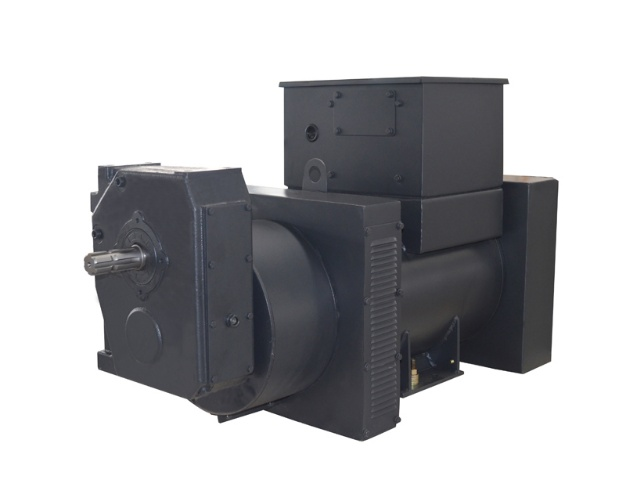
In industrial power generation, optimal equipment integration depends on close coordination among the prime mover, alternator, control system, and other supporting components. The prime mover supplies mechanical torque, while the alternator converts that mechanical energy into electrical energy. For generator manufacturers and system integrators, the performance of the alternator has a direct influence on voltage regulation, power quality, thermal performance, and overall electrical reliability.
Growing demands for application-specific power equipment are placing greater pressure on standardized electrical components in such areas as mechanical integration, thermal management, inventory planning, and product development. Working with an experienced alternator supplier gives manufacturers access to customized electrical and mechanical configurations while improving coordination between the alternator and the prime mover. This supplier relationship can therefore become an important part of the wider industrial power generation supply chain.
Tailoring Alternator Solutions for Different Industrial Power and Voltage Requirements
Industrial applications have widely different electrical requirements. Data centers may prioritize stable voltage and fast response to load changes, while mining operations, marine applications, telecommunications infrastructure, and remote power systems may require different combinations of power rating, voltage, frequency, mounting configuration, and environmental protection.
For this reason, a standard alternator is not always the most efficient choice for every equipment design. A specialized manufacturer can develop an alternator according to the required power, voltage range, frequency, and installation conditions. EvoTec Power’s customized alternator offering, for example, includes the TCU228 with a listed range of 50/5313 kVA, 400/480V, and 50/60Hz, with IP44 protection. The TCU428F is listed at 125/4375 kVA, 400/480V, and 50/60Hz with IP55 protection. These configurations give equipment manufacturers greater flexibility when matching an alternator to different prime mover and system requirements.
Winding configuration is another important consideration. EvoTec’s R&D materials identify 2/3-pitch winding as part of its alternator design approach, with the winding and damping structure optimized to reduce waveform distortion and support stable operation and parallel performance. Customized arrangements can also address mounting and connection requirements, helping system integrators create a better mechanical and electrical fit between the generator head and the rest of the power system.
Shortening R&D Cycles and Reducing Inventory Costs with a Custom OEM Alternator
For generator manufacturers, every new product configuration can require additional engineering work. Mechanical dimensions, shaft alignment, ventilation, thermal performance, vibration behavior, and electrical matching all need to be considered before an alternator can be integrated into a final system.
A custom OEM alternator can reduce some of this integration workload by allowing the electrical machine to be developed around the application rather than forcing the equipment manufacturer to redesign the surrounding structure around a fixed off-the-shelf product. EvoTec Power states that its customized alternators can be developed according to customer requirements for power, voltage range, and frequency, supported by a provincial-level R&D center and dedicated technical team.
Physical dimensions can also affect system-level engineering. EvoTec describes its alternators as using a shorter and thicker outer structure, with the company’s website stating that its short-structure design can be more than 100 mm shorter than similar alternators. According to the manufacturer, this design can improve ventilation and heat dissipation while saving installation space and material requirements. For OEM equipment builders, such compact form factors can potentially simplify enclosure design, skid-mount integration, packaging and logistical-transport arrangements.
Customized sourcing can also contribute to leaner inventory management. Instead of maintaining large quantities of multiple standard alternator configurations, manufacturers can work with an alternator supplier to define the required specifications for individual applications and production programs. This can help reduce unnecessary component variety and the capital tied up in excess inventory.
Enhancing Reliability in Harsh Environments Through Technical Collaboration
Industrial alternators may operate in environments affected by humidity, salt spray, dust, temperature changes, vibration, and demanding load cycles. Reliability therefore depends not only on electrical output but also on insulation, enclosure protection, cooling, and environmental adaptation.
EvoTec’s customized alternator range includes protection options such as IP44 for the TCU228 and IP55 for the TCU428F. These ratings provide defined levels of protection against solid particles and water ingress, helping the alternator better withstand demanding installation environments while maintaining the airflow required for cooling.
The company’s R&D materials also describe moisture-proof, mildew-proof, and salt-spray-proof treatments for winding surfaces, which are intended to improve protection in marine and industrial environments. High-quality insulation materials and vacuum pressure impregnation technology are also used to improve the strength and stability of stator and rotor windings. These measures can support reliable operation when the alternator is exposed to challenging ambient conditions.
Excitation and voltage regulation are equally important. EvoTec states that its ETC series automatic voltage regulators incorporate functions such as frequency compensation, solid-state excitation, EMI filtering, stability adjustment, and voltage selection. The company also states that its digital AVR development has resulted in three national patents, while ETC-2 and ETC-3 include parallel-operation functions and over-excitation protection.
Building a Stronger Industrial Power Supply Chain
For generator manufacturers, choosing an alternator supplier is not simply a purchasing decision. It can affect product development speed, mechanical integration, electrical performance, environmental reliability, and inventory efficiency. The right supplier should therefore provide more than a catalog of standard products; it should also offer technical cooperation and customization capabilities.
With a priority on R&D and manufacturing, EvoTec Power serves the industrial and marine synchronous alternator market, offering low-, medium-, and high-voltage products as well as customized alternator solutions. Its official materials also highlight dedicated R&D resources, independent technology development, and customized product services.
For manufacturers building complete power generation systems, this distinction is important: EvoTec Power supplies the alternator or generator head, which converts mechanical energy into electrical energy, rather than a complete generator system. By working with a specialized alternator supplier, manufacturers can obtain an alternator that supports the required kVA rating, voltage, frequency, mounting arrangement, and environmental conditions while integrating it with the appropriate prime mover and other system components.
This collaborative approach can make the industrial power supply chain more resilient, helping generator manufacturers develop application-specific products while maintaining a practical balance between performance, engineering efficiency, and production cost.
