
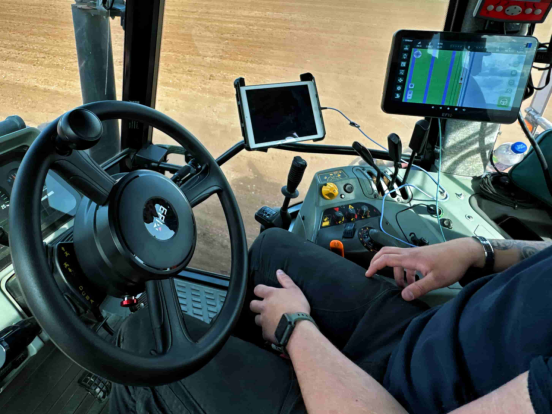
Large-scale farming operations increasingly rely on precision technologies to improve field efficiency and reduce manual driving pressure on agricultural machinery operators. One of the core technologies supporting this shift is the autosteer system, which helps tractors maintain consistent guidance across long planting or harvesting routes. By reducing steering deviation, farmers can achieve more uniform field coverage and better resource use efficiency. Companies such as EFIX develop guidance solutions designed for practical agricultural environments, including uneven terrain and variable weather conditions.
Navigation in Field Operations
In modern agricultural management, navigation accuracy directly influences productivity during planting, spraying, and harvesting cycles. A well-implemented autosteer system reduces overlap between passes and minimizes gaps that may affect crop yield consistency. It also allows operators to focus more on machine monitoring rather than constant steering adjustments. In practice, farmers using EFIX guidance products often report smoother line tracking even in large irregular fields. Their solutions, such as the eSteer20 Max, are designed to integrate with existing tractor platforms without requiring major mechanical modifications, making them suitable for different fleet sizes and operational conditions.
Operational Efficiency and Data Use
Beyond steering control, digital farming systems increasingly incorporate data analytics to support decision-making in the field. The autosteer system contributes indirectly by ensuring consistent path execution, which improves the reliability of mapping and field records. This allows farm managers to better evaluate input usage and operational time across different plots. EFIX continues to refine its positioning technology to support compatibility with GNSS signals used in diverse agricultural regions, helping equipment maintain stable guidance performance under changing conditions.
Conclusion
Large-scale agricultural operations continue to adopt automated guidance technologies as part of broader precision farming practices. These systems help standardize field operations and reduce operator workload across long working hours. While different brands offer similar solutions, integration quality and field adaptability remain key factors in real-world performance. EFIX provides guidance equipment options such as the eSteer20 Max, which can be applied in various tractor configurations without complex setup requirements. As farming environments become more data-driven, these systems are expected to remain a practical tool for improving consistency in daily operations.
Future adoption will focus on connectivity with satellite positioning and farm management software. These technologies can support more coordinated agricultural workflows across large fields and improve seasonal operations.
