
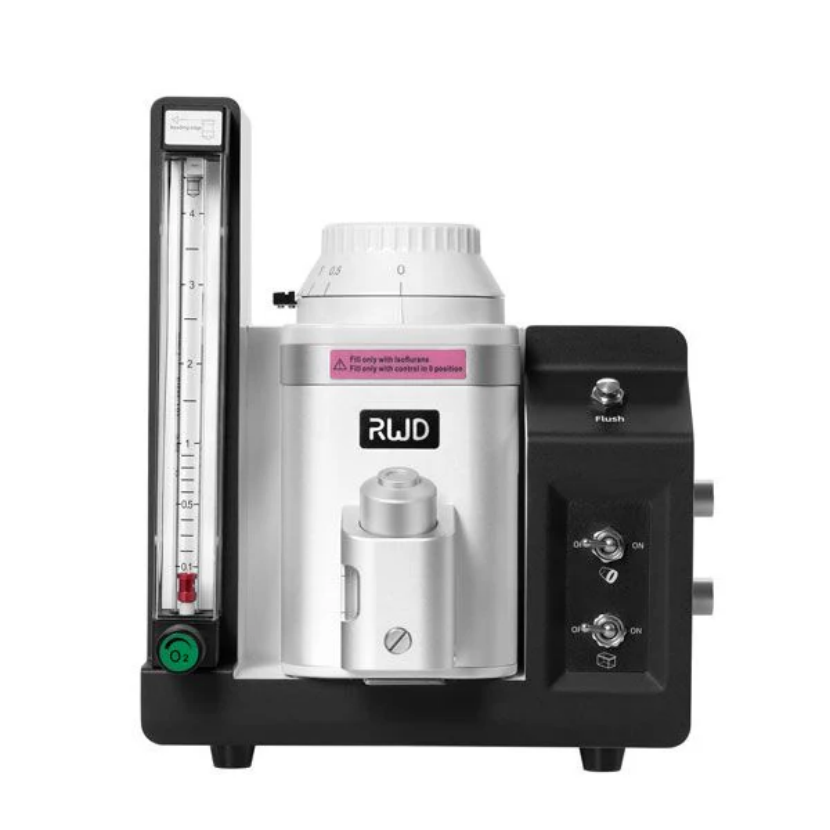
For individual preclinical researchers, small animal behavior lab teams, and student investigators, consistent, humane anesthesia induction is a critical step in nearly all mouse surgical and imaging experiments. The mouse anesthesia chamber is the core component of this workflow, paired with a small animal anesthesia machine to deliver controlled, uniform anesthetic gas, and its size directly impacts induction speed, animal welfare, and experimental consistency. Many novice users overlook chamber sizing, leading to delayed induction, uneven gas exposure, or unnecessary animal stress, making clear guidance on ideal dimensions essential for 2C end users. Providers like BPLabLine offer precision-engineered solutions tailored to these needs, with mouse anesthesia chamber designs optimized to pair seamlessly with a small animal anesthesia machine for reliable performance.
Balanced Volume for Rapid, Humane Anesthesia Induction
The core principle defining the ideal mouse anesthesia chamber size is a balance between sufficient animal space and minimal excess volume to enable rapid, consistent induction. For a single adult laboratory mouse, the ideal standard chamber has a volume of 300–500mL, with dimensional proportions of 10cm × 8cm × 6cm (L×W×H). This size provides enough space for the animal to turn freely without restraint, reducing pre-induction stress, while eliminating excess volume that would require higher gas flow rates and delay consistent anesthesia onset. For multi-animal chambers, the ideal size scales to 100–150mL per additional mouse, maintaining the same balance of space and gas efficiency. BPLabLine’s TAIJI small animal anesthesia machine is paired with mouse anesthesia chamber options calibrated to these volume standards, ensuring uniform gas distribution and consistent induction within 60 seconds.
Compatibility and Consistency for Reliable Workflows
A second critical factor in ideal chamber sizing is seamless compatibility with the small animal anesthesia machine and consistent performance across experimental replicates. The ideal mouse anesthesia chamber includes standardized inlet and outlet ports sized to match the tubing of a standard small animal anesthesia machine, preventing gas leaks and ensuring precise control of flow rates and isoflurane concentration. A properly sized chamber also eliminates variables between experimental groups, as identical gas parameters will deliver consistent induction times across every trial, reducing the risk of over-anesthetization or incomplete sedation. This consistency is especially valuable for small teams and student users, who may not have extensive experience optimizing anesthesia workflows.
Guiding Principles for Mouse Anesthesia Chamber Selection
In summary, the ideal size for a standard mouse anesthesia chamber is defined by two non-negotiable pillars: a volume balanced for rapid, humane induction, and full compatibility with the paired small animal anesthesia machine. For single adult mice, the 300–500mL volume with 10cm × 8cm × 6cm dimensions strikes the perfect balance between animal welfare and experimental efficiency, with scaled options for multi-animal use. For 2C end users, selecting a properly sized chamber eliminates common anesthesia workflow errors, reduces animal stress, and improves experimental consistency. BPLabLine’s animal behavior & physiology research collection offers fully optimized mouse anesthesia chamber and small animal anesthesia machine packages, designed to meet these ideal size standards for reliable, humane preclinical research.
