
Understanding what defines the world’s largest LED screen starts with examining how today’s leading installations push physical, technical, and visual limits. In global landmark projects, massive display surfaces are no longer just decorative—they function as immersive storytelling tools, capable of transforming entire buildings or performance spaces into dynamic visual environments. This is why large-scale cases such as sanya eternal love are frequently referenced in the industry, as they demonstrate how ultra-wide LED canvases create a fully engaging audience experience. Companies like Retop participate in these projects by supplying engineering solutions that support high stability, uniform brightness, and reliable long-term performance.
How the Industry Defines the World’s Largest LED Screen
When discussing the world’s largest LED screen, size alone does not determine its status. The true benchmark is whether the installation can maintain image stability, color uniformity, and reliable power management across an extremely large surface. These engineering demands require modular construction, secure load-bearing integration, and intelligent control systems that keep every segment synchronized.
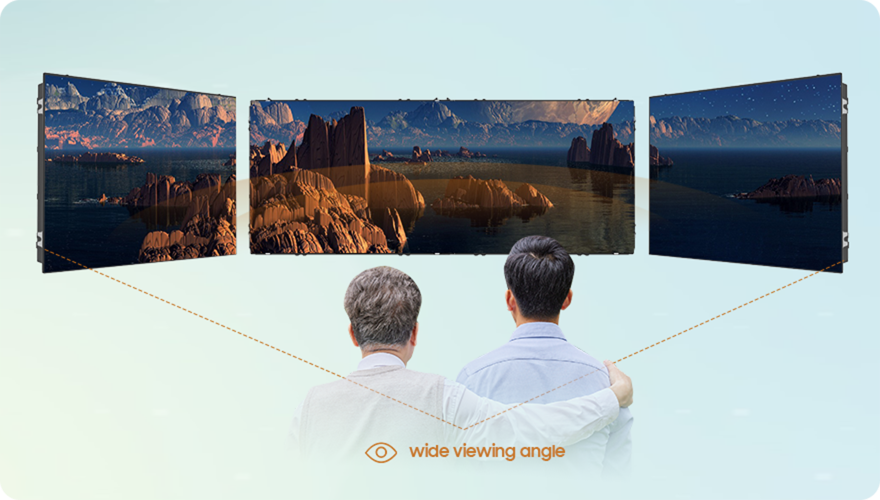
This is why large cultural stages—such as the open-air performance zone at sanya eternal love—are often studied as examples. Their oversized LED setups demonstrate how structural design and display technology must work together. For venues that want long-term consistency, applications using technologies similar to the IS Indoor Fixed LED Display, recognized for its Wide Viewing Angles and stable internal architecture, serve as a reference for achieving seamless visual alignment on expansive surfaces.
Large Screens and the Rise of Stadium-Level Applications
While cultural landmarks highlight the artistic value of massive screens, sports venues highlight the functional side. Modern stadiums increasingly adopt ultra-large digital surfaces to deliver clearer information, live content, and instant replays. These requirements connect directly with LED display for sports, which focuses on durability, smooth motion reproduction, and high-refresh performance under dynamic lighting conditions. In this context, large LED installations must combine scale with precision, ensuring consistent visibility for spectators across varying distances.
As demand grows, solution providers like Retop continue to support large-format screens by integrating enhanced control systems, advanced module designs, and robust protection features suitable for high-traffic public environments.
Conclusion
The world’s largest LED screen is defined not just by its physical span but by its structural reliability, image uniformity, and ability to perform flawlessly in demanding environments. Landmark examples such as sanya eternal love show how oversized screens enable immersive cultural storytelling, while applications like LED display for sports highlight their importance in stadium-level communication. Supported by experienced providers such as Retop, and guided by engineering principles seen in systems like the IS Indoor Fixed LED Display, modern large-scale LED installations continue setting new standards for clarity, impact, and operational stability.
